
MY PAL RHODA
In memory of Rhoda Levine (1933-2026) dancer, choreographer, notable opera director, author and teacher
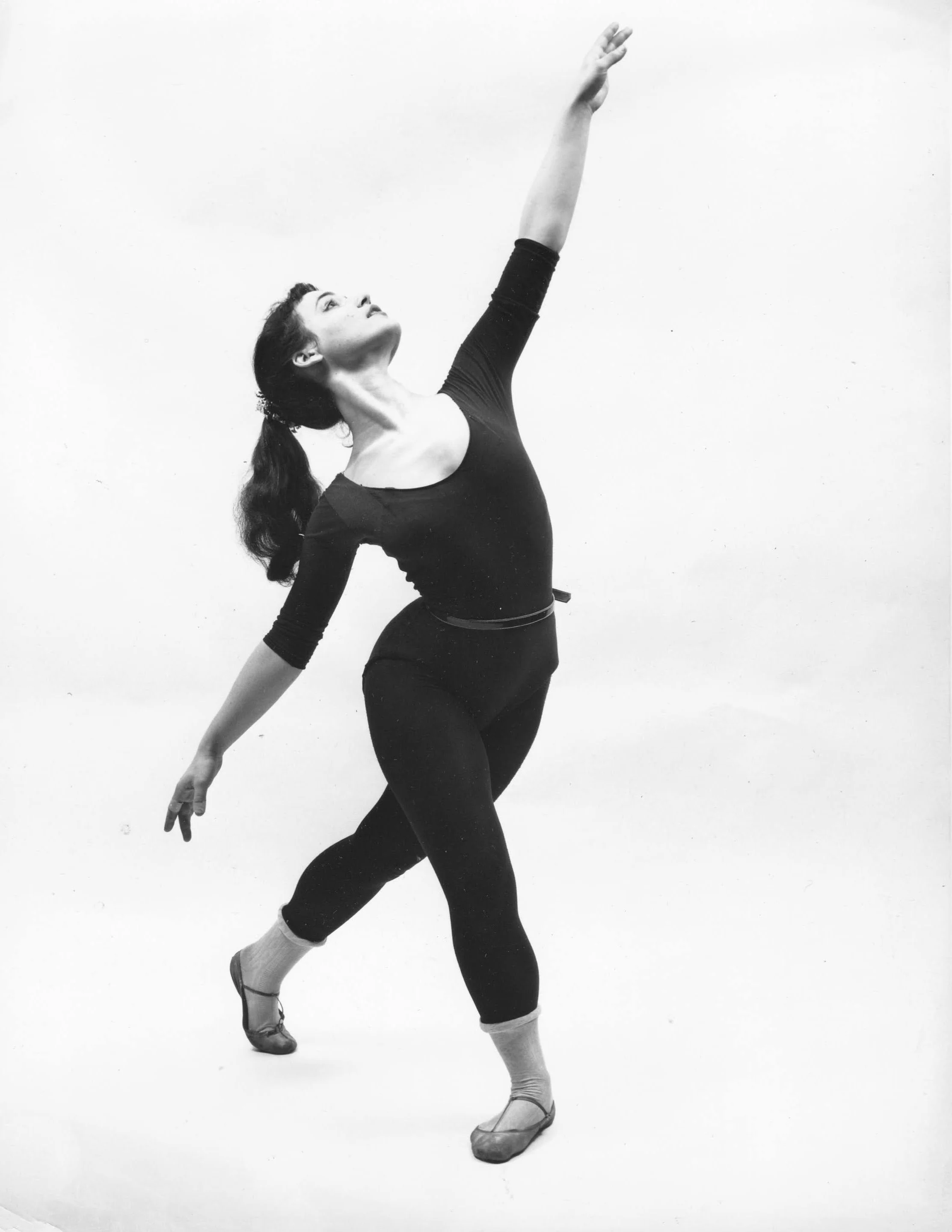
I first met Rhoda in an elevator at the Banff Center for Fine Arts, Canada. She was dressed head to toe in a casual purple getup with a heavy silver amulet hanging around her neck—a signature outfit that would become all the more familiar the longer I knew her. Much later, she told us that it bore her teeth marks from her mother when she was an infant. It was just the two of us in the elevator so she smiled wryly and said ‘Hi, I’m Rhoda’ in that lovely half-silky half-guttural growl of hers. We soon got to talking and lingered outside the elevator when our ride was complete. She told me she was teaching movement and dance, and I told her about the Music Theatre Studio Ensemble I was studying with and how I was writing them a piece.
‘But that’s fantastic. You’re slumped all day over a desk I’ll bet’. I nodded in response.
‘That’s why you should come to my class - I’ll straighten you out’ - taking in my nerdy posture and habitual stoop. ‘Tomorrow morning at nine. Be there’.
Strangely, I have no memory of the actual class, beyond an entirely welcoming and warm smile, aided by the brightest splash of red lipstick, and the fact that she allowed a body conscious geek to unbend and cavort unselfconsciously - in public.
Somehow this encounter developed into a close friendship of forty years. Rhoda adored her students, had endless patience for them, was always approachable and available and was profligate with her phone number. So when I started visiting New York regularly from the late ‘eighties onwards I would look her up. This was the period of her improvisatory opera company, formed almost entirely of ex-students, Play It By Ear. If I were in town, I was included. A subject, a mood or a character would be suggested, either by Rhoda or a member of the group, someone (occasionally me) would sit at the piano, and a sung and acted scene would materialize. As with all such things, success rate was variable, though one could, by chance, strike gold. All members of the group, performers included, would then chime in with thoughts and reactions. Rhoda would insist that it was the creative process and not product that was of significance here. Even when she was directing top flight professional singers, she would rarely impose an idea. Rather, she would ever so gently interrogate them about their feelings for the characters they were playing, and would remind even those with the smallest part, that for that character, they were the protagonist of the opera. In this improv group, her techniques were the same—student performers, however inexperienced, would be questioned: ‘Why are you here?’ ‘Why are you feeling this?’ “What way would you move?’ and so on, so the performers could inhabit their characters with a personal and coherent subtext. Rhoda had started her career as a dancer, then went on to choreography and directing, so her insights were wide-ranging. This was all grist to the mill for an aspiring opera composer, who had already been lucky enough to have a handful of short works staged at Banff. It was nothing short of revelatory for me, as a creator, to witness the evolution of a character through the performers’ eyes, and discern how I might help a performer by creating work that gave them wiggle room to bring a personal stamp to a role.
We would regularly adjourn for pizza afterwards, and I was thrust, as the alien Brit, into a crowd of aspirant New York performers, a totally novel milieu for me, both liberating and exciting. We would would habitually crowd into Rhoda’s village apartment on 8th Street to hang out with her and her cat Jeoffry, the name to be found in the poem Jubilate Agno—with its famous line: ’For I will consider my cat Jeoffry’—by Christopher Smart, the 18th century visionary poet. In fact I think it was the fact that I knew and could quote this poem that quickened our friendship in these early years. Rhoda would generously treat us all to coffee, which was never home brewed—always sent out for. Someone would then draw the short straw and go to pick it up. In all the years that I knew Rhoda, coffee was never made at home. Had she invested in a coffee pot, she could have amassed a property portfolio. The apartment was an embodiment of Rhoda: a potentially spacious place transformed into an Aladdin’s cave of treasures, chaotic piles of papers spilling behind sofa and chairs, shelves groaning under all number of books on variegated subjects, pictures, photographs of the great and good, a piano covered in music, dedications, old and new vases of flowers, programs and medications. The focal point was a beautiful wide window, in front of which was placed the sofa, turning into the room. This window, a striking art deco frame to match the imposing period building was covered in taped on postcards, photocopies, slogans, with Nelson Mandela as centerpiece visible from the street. This all seemed to me then to be the epitome of New York bohemian Village cool - as was Rhoda herself. In a group, she would single people out in the nicest, most encouraging way and ask questions in that smoky tough-guy drawl of hers; ‘Hey, whaddaya think, kid?’ which would always remind me of Humphrey Bogart. I told her that once, after I’d known her for a bit longer and she gave me an incredulous look, and then giggled mightily. Mixed in with these sessions, especially when guiding performers to find the emotional truth of oppressed characters, was her activism. She exhorted her students to vote, to be aware, to think critically and to protest. When I saw her productions (Malcolm X, Of Mice and Men) I realized how this activism was fundamental to her work, and how skillfully she messaged such views in the guise of entertainment.
I had acquired a lovely husband in London, Peter, an expat New Yorker. At some point I had introduced him to Rhoda. They clicked immediately, though Peter would tease her mercilessly, especially about her propensity for recounting past tales of her career, profusely dropping first names: Luchino, Teresa, Philip, Ezra, Sam, Ed, Giancarlo, Ethel, Martha, Sheldon, and so on and so forth. Then, in the early nineties, she needed to come to London for some reason, and she stayed with us. One day, she said to me, ‘I want you come with me, and meet my friend Sandy.’ It turned out he lived very close to us, in South Kensington, and so we walked over. On the way, she dropped, casually, that he’d written a musical or two. It turned out to be Sandy Wilson, composer of that irresistible 1920’s pastiche The Boy Friend. I had, as it happened, played in a school production, and my mother had a collection of West End theatre programmes that I remember leafing through, that included one for the short-lived sequel, Divorce Me, Darling. Rhoda had been involved, as dancer and as choreographer in productions of The Boy Friend and we four, including Sandy Wilson’s partner, Chak Yui had a convivial afternoon. Sandy had been the one first name regularly dropped that I’d never identified. Walking back Rhoda mumbled: ‘He’s not very happy is he? It’s a mistake to hit the jackpot on your first try,’ referring to the runaway success of The Boy Friend.
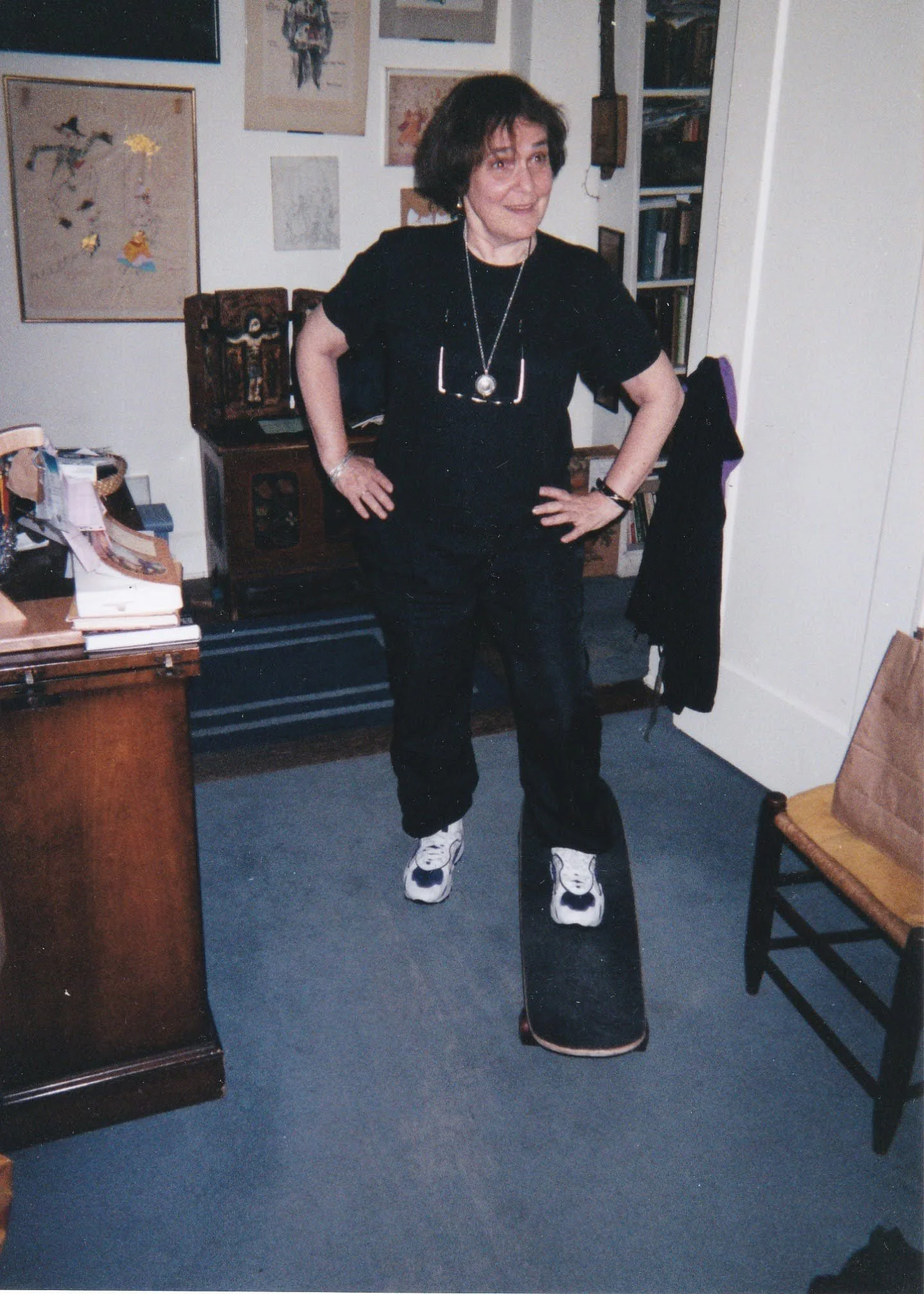
A little later Rhoda acquired a boyfriend herself, Charles, a lawyer who seemed a very kind and avuncular chap. I knew little of Rhoda’s love life, but she had mentioned a ten year liaison with the General Director of Netherlands Opera, Hans de Roo, much earlier in her life. Charles even asked Rhoda to marry him. The thing was, whenever she talked of him, she never had a good word to say: he was always too literal, he didn’t think of this or that, he didn’t understand her world—and so it went. Somehow he just could never get things right. One day he turned up, announced that he had gotten married and hoped that they could remain friends. Rhoda was devastated, grieving for quite some time. She got very angry with me when I recalled her litany of disapproval when it came to Charles. Then she quietly confessed that she was scared of growing old alone.
Peter and I decided to nominate Rhoda as godmother when we adopted our two daughters, Harriet and Ottilie, from mainland China—becoming a father was a surprise to all, especially me. We figured that there were enough fathers in these girls’ lives already; what they needed were strong and accomplished female role models. Rhoda’s brand of activism fit the bill. From then onwards, we became particularly close, almost family. At first, she was the best godmother ever. Whenever we visited, there would be all the familiar catnip for little girls - stickers, endless crayons and paper supplies, lollipops and the like. She would crawl on the floor with them for hours, as would Charles, when he was around. Cat Jeoffry, by now old and cranky with failing kidneys that had to be hydrated, did not approve at all and would protest from a distance—possibly jealous of all the attention these munchkins were getting. As the girls grew older, Rhoda didn’t quite keep up with them. As the allure of stickers and crayons receded and pink fashions were the craze, Rhoda, in her ubiquitous purple, was no longer quite the Pied Piper that she had been. Pre-teen girls’ obsessions were somehow alien to her. However, she did take us all, on the hottest day of one summer, for a splendid adventure to the Bronx Zoo, which very much put her back in favor.
Later in life, she took me along to an independent bookstore in Brooklyn, where she had been invited to read. In the 1960’s she had written a series of whimsical children’s books, some illustrated by Edward Gorey, and from 2010 on, the New York Review of Books reprinted a series of them. Rhoda sat in a capacious armchair and started to read. However, the audience was unexpected. Many parents had well-meaningly brought along very tiny offspring, with pandemonium ensuing. Without missing a beat, Rhoda, by then pushing 80, eased herself onto the floor, and proceeded in baby-talk to sing songs, teach counting and alphabet skills, while these tiny mites happily crawled and dribbled all over her. The bookstore owner admiringly observed that none of their other authors had done that and her visit was accounted a tremendous success. The book was never read.
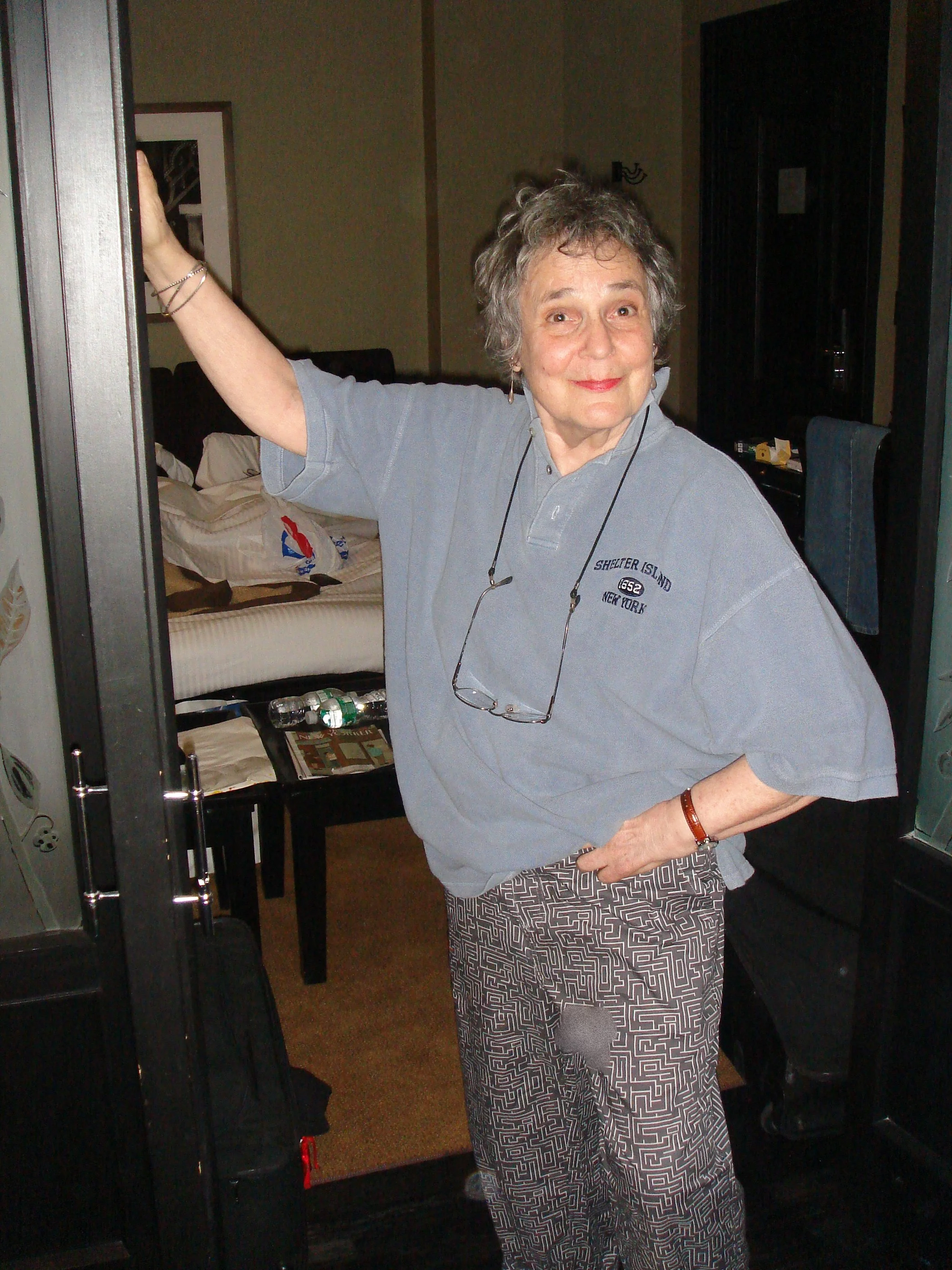
Peter and I had been living in Hong-Kong from 1996, Japan from 2000, and then returning to London in 2002. While in the Far East, we bought a summer house in Shelter Island, NY, where we still now spend the holidays. We would precede each stay with a party in New York City, at a restaurant, East of Eighth, in Chelsea. This was a ritual that lasted ten years, ending in 2010 when we moved to America—Peter returning after thirty years posted abroad, and me, emigrating. The party was always within a few days of Rhoda’s birthday, so she always featured in the celebration. The girls, though, still little, naturally upstaged her, swarming around in search of cake and presents along with with their cousins. Rhoda would invariably shift into high gear and round them up like a mother hen. She was a regular visitor to Shelter Island, and suffered our daily pilgrimage to the beach. One could tell that it was emphatically not her scene, but she always gamely joined in, though drew the line at swimming.
Rhoda’s directing career had wound down—I believe her last production was a new opera in Nebraska in 2007—but she remained a longtime faculty member at both Mannes and Manhattan School of Music, and she invited me to observe a couple of her classes there. Her approach was the same as in her Play It By Ear days, and she was valiant with a rather changed student body: a majority from the Far East to whom being asked questions by a teacher that had no definite answer was totally alien. Nevertheless, she was untiring in her efforts to loosen them up, encouraging self-expression, refusing to let them be stiff and proper.
Though Rhoda played the part of concerned Jewish mama to her students, asking them if they were eating properly and sleeping regularly, when it came to domesticity, she was anything but. Not only had never a cup of coffee been brewed in her apartment, nor was there evidence that she had ever cooked a meal in her entire life. Certainly, when she visited us on Shelter Island, she regarded our efforts at rustling up picnics and impromptu dinners for packs of sandy children and parents as nothing short of legerdemain. Once, much earlier, when the girls were tiny and we had just moved from Japan to London, Peter had come to the US to endure some team building exercise for work on the ski slopes in upstate New York. Instead, he did something catastrophic to his knee and was unable to walk. He had a night in transit at a New York hotel and got in touch with Rhoda, asking her if she could possibly bring him breakfast, as he was starving and couldn’t walk. She turned up an hour later with a large pack of frozen bagels! Much merriment ensued, though he still went hungry, the frozen bagels applied to his swollen knee instead.
At this point, I was writing regularly for Opera Magazine UK, and was asked to write a feature for their 60th anniversary issue on developing new opera. At this point Rhoda was a regular professor at the John Duffy Institute, a workshop for young composers funded by the Virginia Arts Festival in Norfolk, Virginia. So, she got me invited, and I observed this melting pot of new creativity. In action, Rhoda was unfailingly positive, and had a way of pinpointing fundamental dramatic weaknesses in the nicest possible way. It was 2009 and I knew we would be moving to the US soon, so I was grateful to her for the chance to meet some movers and shakers in the American opera world. And I particularly relished meeting the veteran composer and festival’s namesake, John Duffy, founder of the organization Meet the Composer; and, like Rhoda, a veritable history book of contacts and stories from the musical world. We kept up a very pleasurable correspondence until his death in 2015. Rhoda and I went together to his very touching and affectionate memorial in Battery Park, and scattered blossoms in the water together.
After we moved to America in 2010, I would see Rhoda regularly on my stays in the city, and even lured her down to Princeton a couple of times, once for a premiere of an orchestral piece of mine. We would go to galleries, concerts and operas together, and though always supportive if she knew somebody involved, would often give me a conspiratorial side-eye during the event when it disappointed—no words necessary until we got home. Occasionally, old colleagues from her days in Holland would pass through doing fringe events in small spaces and we would schlepp to obscure venues in Brooklyn and beyond, even in the depths of winter. We even drove together to Bard College—her old stamping ground—to attend an obscure opera I wanted to see (Franz Schreker’s Der Ferne Klang); and she gave me a thorough tour of the campus. At the performance she enjoyed being recognized by many members in the audience. I got a kick out of being introduced to Catherine Malfitano, a notable diva, and other friends and colleagues, composers Joan Tower and Victoria Bond. Around this time, David Williams entered her life. A newly minted film maker, he wanted to make a documentary featuring her so he set out to interview those who knew her or had worked with her. He held a fund raiser of work in progress at the beautiful National Arts Club, Gramercy Park. Though, by now, Rhoda was becoming frail, she gussied herself up, I believe (unless my memory has failed me) renouncing her signature purple for a crimson top, fielding questions and reminiscing with an aplomb that belied her years.
I would still constantly visit, always calling beforehand to ask how many coffees I should bring, though we would often drink ‘ein bischen’ vodka into the evening while putting the world to rights. By now there had been three successors to the original Jeoffry and they were both She-Jeoffrys. The first had started with a different name, but Rhoda habitually called her Jeoffry, and as the cat seemed indifferent to this matter, it stuck. She always demanded news of the girls - who would occasionally visit in person - and of the pooch we had rescued in China, Fuqi. One of the last outings I took her on was a new opera showcase organized by Opera America, early in 2017 at Town Hall, New York, which had excerpts from a work of mine that was due to be produced at Boston Lyric Opera. Again, it was heartening to see how many old colleagues and students approached to pay her homage. Later that year, she was inducted into Opera America’s Hall of Fame and a plaque was unveiled that referred to her as a ‘Pioneer Woman of Opera, Director, Activist, Mentor, Author’. Peter and I just managed to be present at that sweet event, hosted by Carol Domina, laden down with luggage on return from a month in Boston where the premiere of my opera The Nefarious, Immoral, but Highly Profitable Enterprise of Mr Burke & Mr Hare had taken place. Rhoda very much regretted not feeling able to get to Boston for the premiere, and I had often mentioned to her how much I wished we could have worked together in a director/composer relationship. When I received a commission from a Boston early music group, Sarasa, to write a cantata for solo soprano, I remembered Rhoda’s children’s books, several of which she had given and inscribed to the girls, and chose Three Ladies Beside the Sea to set to music. David Williams sent his film crew up to Cambridge to record a performance and later held a party in his New York apartment so that Rhoda could hear the piece. It was the closest we came to an artistic collaboration.
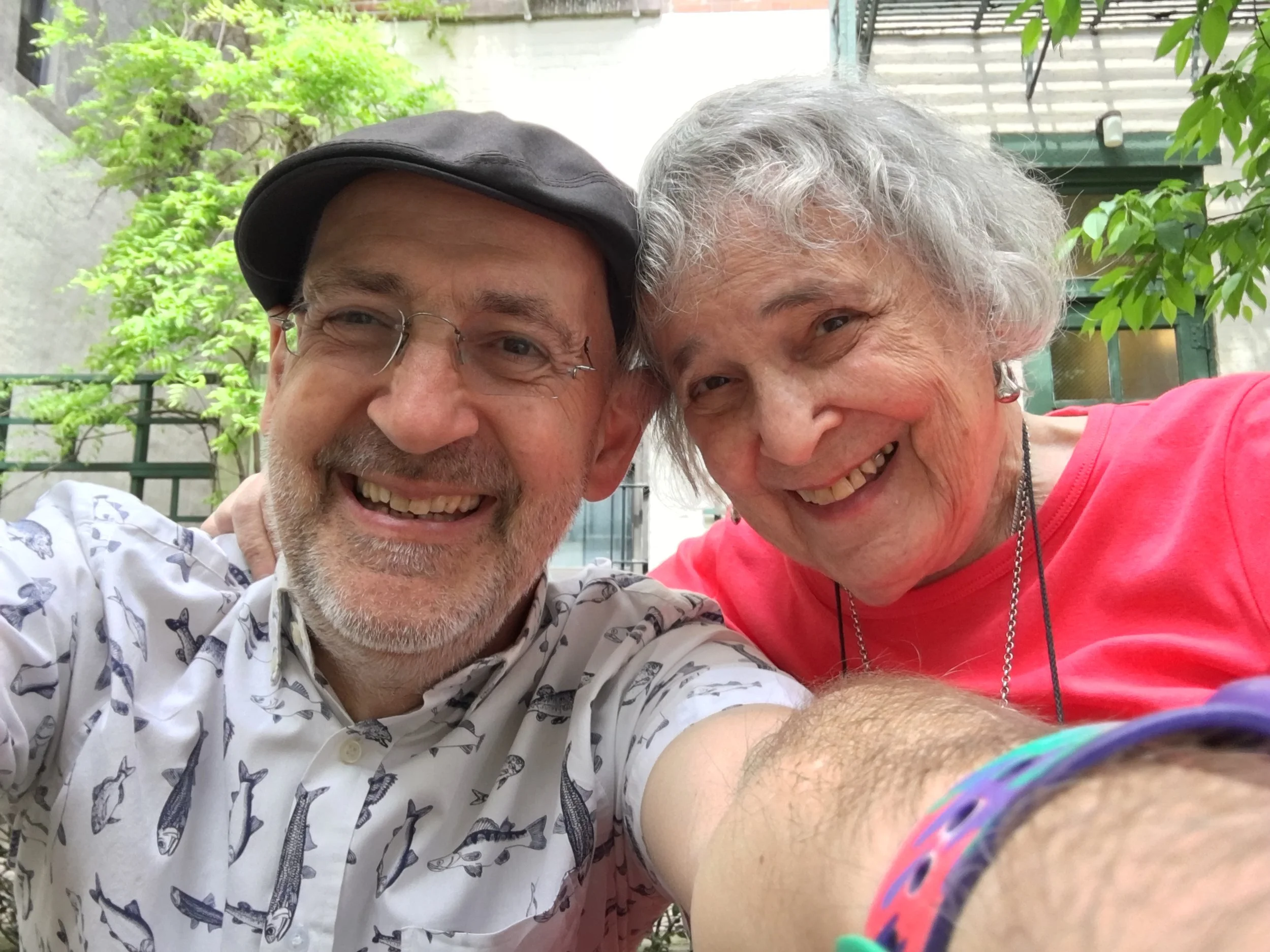
By now, the legacy of her early dancing career had taken its toll, and she was increasingly in chronic pain, that became unmanageable. Her life became smaller, she retired from teaching, gradually becoming confined indoors and to her sofa, and carers took over her daily needs. An ex-student, Megan Schubert, was a wonder of patience and help, and a very sunny presence for Rhoda to have around. If a day were especially radiant, she could be persuaded to manage the stairs (it was only a second floor walk up) to bask in the sun of the lovely sheltered communal garden in her building; but soon that became too much. Inevitably her memory suffered, and her deafness increased. I would still visit whenever I was up in the city, always bringing coffee and brightly colored flowers. She would rally immeasurably if I managed to hook her into going down memory lane - I would ask her all about her ground-breaking productions, especially Der Kaiser von Atlantis, an opera by Viktor Ullmann, written in Terezin, where he was murdered, the belated premiere of which, in Holland in 1975, was directed by Rhoda. Or Malcolm X at New York City Opera, or a memory of a little boy who hung around the stage door in Cape Town, where she directed the South African premiere of Porgy and Bess in 1990. She had never known where he came from or who he belonged to, she said, and regretted not having scooped him up and adopted him. Our sessions would invariably end with her insisting I take home books from her stuffed bookshelves and a total wonderment that forty years had flown past since that initial chance encounter in an elevator in the Canadian Rocky Mountains. Dear Rhoda, what a lot you meant to me, and to so many others.
© Julian Grant 2026